
By Shane Dempsey , ARC Mediation – Founding Partner
I’m wary of how prevalent the word “toxic” has become in discourse because it can shut down curiosity about why people behave the way they do. Yet the phrase “toxic positivity” usefully names a pattern: insisting on upbeat thinking while avoiding or dismissing real distress. That avoidance may come from kindness or discomfort, but its effect is the same; it silences emotions that contain information about harm, boundaries, and necessary change.
Why this matters in coaching. Good coaching is not cheerleading. When coaches rush clients from grief, anger, or disappointment straight to “what’s next,” they risk penalising legitimate feelings and missing signals that point to structural problems or behaviour change the client needs to make. Authentic coaching sits with difficulty first, then helps translate it into action.
Why this matters in mediation. Mediators can fall into the same trap. Pushing parties to “stay positive” or to “move on” can produce superficial settlements that paper over unresolved grievances. Unprocessed anger or grief often resurfaces as non?compliance, resentment, or renewed conflict; exactly what durable dispute resolution seeks to avoid!
Skilled mediation validates emotion, then uses facts and structured problem?solving to build agreements that last. Durable agreements do not arise from ignoring the emotions of the parties.
The harm of enforced optimism. Emotional suppression doesn’t erase problems; it can magnify shame, anxiety, and mistrust, and it undermines people’s epistemic agency; their ability to trust their own perceptions. That’s why we should treat negative emotions as data, not defects.
A better approach
- Validate before reframing. Name the pain; acknowledge its legitimacy.
- Use healthy optimism. Ground hope in reality: “This is hard, and we can work toward a solution.”
- Pivot to facts and structure. When emotions block progress, shift to observable evidence and stepwise problem?solving.
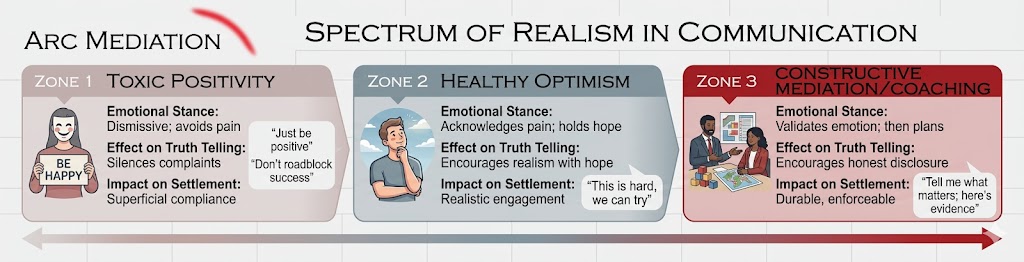
Toxic Positivity vs Health Optimism
Bottom line: Positivity is a tool, not a mandate. Use it after you’ve listened, especially in coaching and mediation, where unprocessed negative emotions are often the clearest guide to what must change.